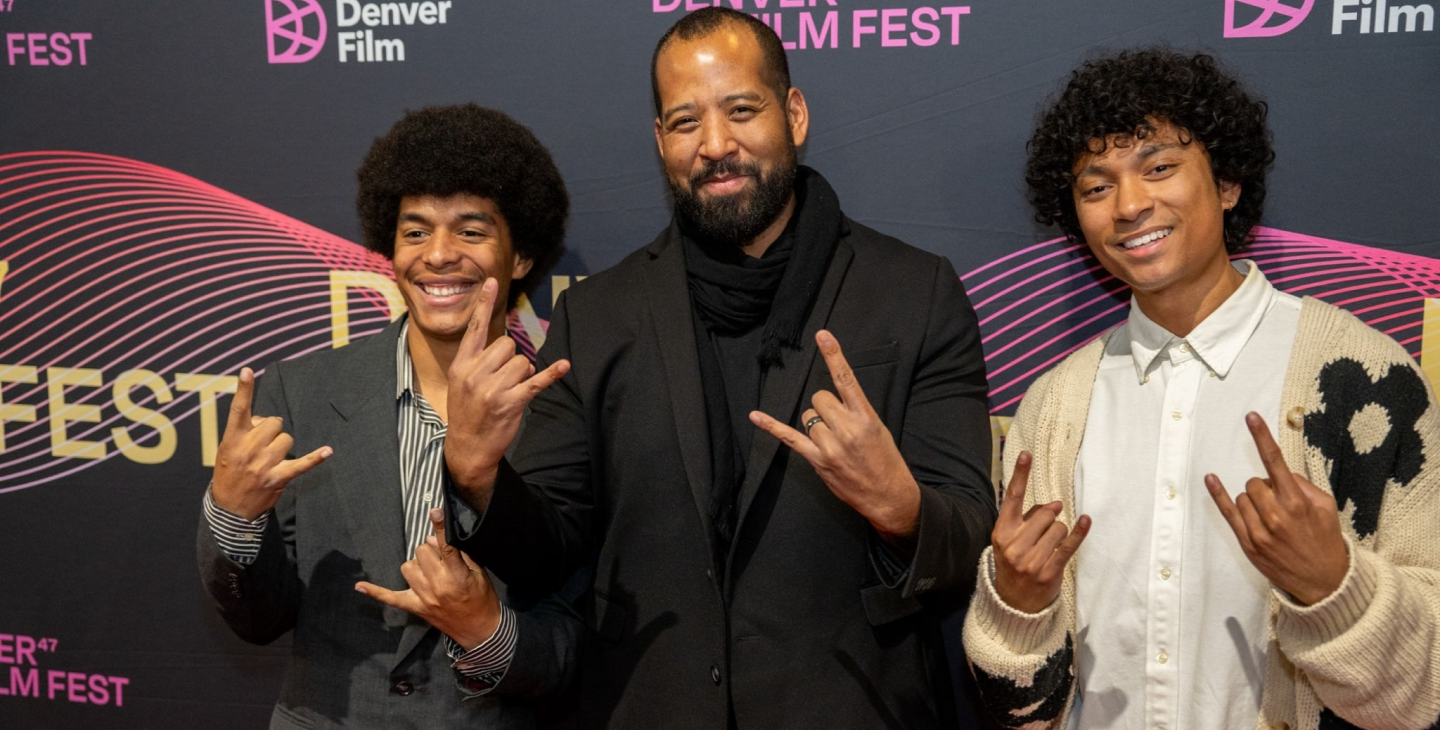
Michael Hyon Johnson's Journey from M Film Lab to Festival Success with Black Metal
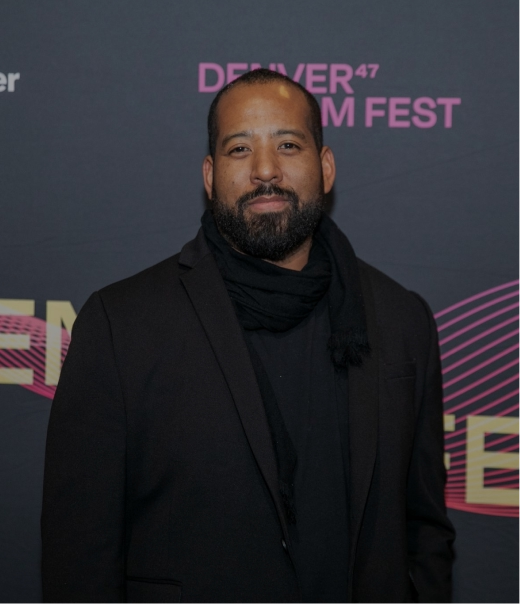
Finding Inspiration Through M Film Lab
For filmmaker Michael Hyon Johnson, the path from screenplay submission to award-winning filmmaker was never about overnight success. It was about persistence, vulnerability, and trusting the creative process.
As an alumnus of the M Film Lab, Michael credits the program with helping him refine his voice as a storyteller, strengthen his screenplay, and build lasting relationships that continue to shape his career today.
Michael was first inspired to apply to M Film Lab after learning that filmmaker Qasim Basir would serve as one of the program’s mentors. As a student in Chapman University’s MFA program, he had studied Basir’s work extensively and based much of his thesis research on the style and tone of A Boy, A Girl, A Dream.
The opportunity to learn from a filmmaker whose work had already influenced his creative development felt like a natural fit.
At the time, Michael was developing Black Metal, a deeply personal story inspired by his own experiences growing up in suburban Colorado.
Telling a Story About Belonging and Joy
Michael knew from the beginning that he wanted to tell a story centered on Black joy and the universal desire to be seen and accepted.
Growing up as one of the only Black and Korean faces in many spaces, he often felt caught between identities.
“Although I had great friends and a strong support system, I still felt a desire for identity and a slight shame of never feeling ‘Black enough’ or ‘Korean enough,’” he recalls.
As a teenager, Michael found community through heavy metal music, but even there he often felt out of place. Attending concerts could be uncomfortable because he worried he would be judged for not looking like everyone else in the crowd.
Through Black Metal, Michael created the representation he wished he had seen growing up—a character who looks like him navigating a world where he ultimately finds empowerment, belonging, and community.
The Unexpected Journey to Becoming an M Film Lab Winner
Winning M Film Lab was not something Michael expected.
Like many writers, he had spent countless hours submitting to fellowships and competitions, obsessing over announcements and outcomes. By the time he applied, he had already shifted his focus toward other projects.
Looking back, that mindset may have helped.
“I genuinely approached the experience as an opportunity to make the story better and did my best to remove any ego,” he says.
After being selected as a mentee, Michael joined a cohort of talented writers and worked closely with mentors and executive producers who challenged him to think more deeply about his story, characters, and themes.
Rather than viewing feedback as criticism, he treated every note as valuable insight into what audiences were connecting with—and what still needed work.
That willingness to listen, adapt, and grow ultimately helped transform the screenplay into a stronger and more emotionally resonant story.
Learning That Writers Are Not Alone
One of the most important lessons Michael took away from the program was the realization that writers do not have to create in isolation.
“People are attracted to great stories and effective storytellers, trust in your process and build your garden. If you’re building correctly, you will naturally attract people who want to see you succeed.”
Winning the M Film Lab provided more than recognition—it validated his belief that audiences wanted to hear the stories he had to tell.
Bringing Black Metal to Life
The support Michael received from M Film Lab extended far beyond script development.
The program invested in his vision and helped move Black Metal from screenplay to production. More importantly, it reinforced his confidence in telling a story that was deeply personal and culturally specific.
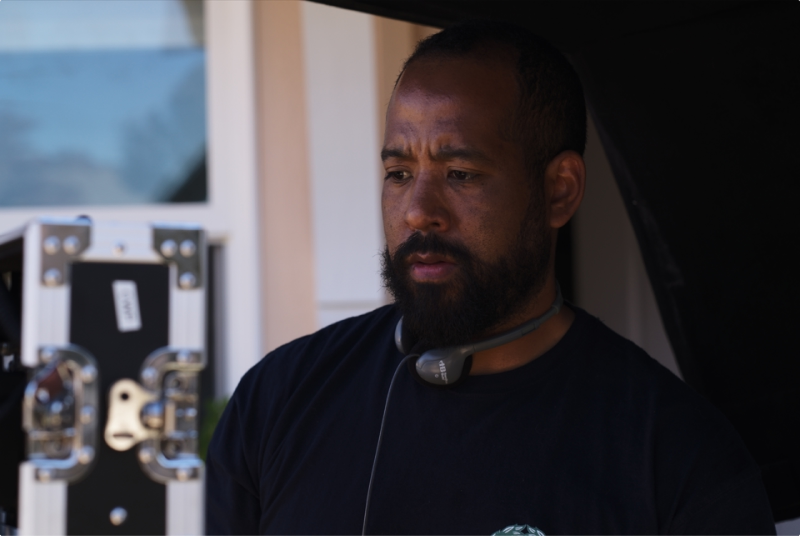
Directing the film was one of the most significant experiences of his career. While he had directed short projects before, Black Metal represented one of the largest productions he had led, supported by meaningful funding and a dedicated creative team.
“I felt an obligation to everyone involved to tell the best story possible,” he says.
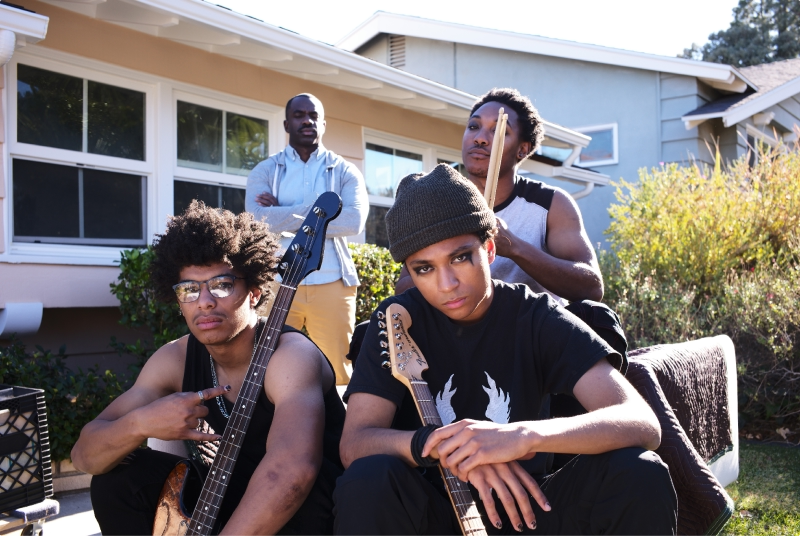
One of the biggest production challenges involved location. Michael wanted the film to authentically capture the atmosphere of Colorado, but production took place in Southern California.
Thanks to a talented production team and carefully selected locations near Calabasas, the filmmakers successfully recreated the look and feel of Colorado, convincing many audiences the film had actually been shot in Denver.
Exploring Identity Through Heavy Metal
At its core, Black Metal explores race, identity, and belonging within the heavy metal community.
Michael drew heavily from his own experiences growing up listening to bands such as Megadeth, As I Lay Dying, Killswitch Engage, Sevendust, and Deftones.
While he often felt like an outsider, his experiences also taught him that communities are more nuanced than stereotypes suggest.
“The reality is that the metal community is surprisingly inclusive,” he explains
The film intentionally portrays a spectrum of characters—supportive allies, skeptics, and outright bigots, to reflect the complexity of real-world experiences. It highlights the uncertainty of not always knowing who will accept you while ultimately emphasizing authenticity, connection, and friendship.
Looking back, Michael is most proud that the film fulfilled its original mission.
“I set a mission to tell a story about Black and Korean joy, The movie is a perfect representation of what we set out to achieve.”
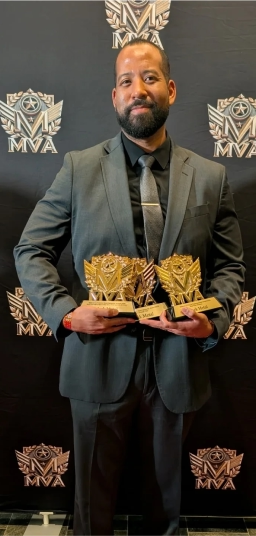
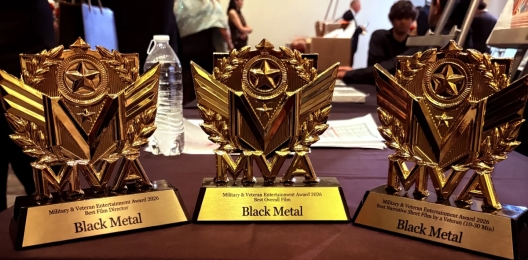
Festival Success and Audience Impact
Since its release, Black Metal has been embraced by audiences and film festivals alike.
“Every festival has been 100% on board with this film,” Michael says. “It’s been an amazing journey to hear the overwhelming support for this story”
The most meaningful responses have often come from audience members who see their own experiences reflected in the film.
At nearly every screening, someone shares how the story resonated with their personal journey of identity and belonging.
Many have expressed feeling isolated because they did not fit expected cultural stereotypes. Watching Black Metal helped them realize they were not alone.
For Michael, those conversations have been among the most rewarding outcomes of the entire experience.
Looking Toward the Future
The success of Black Metal has encouraged Michael to continue pushing forward. Interest from investors has motivated him to expand the story into a feature screenplay, while festival recognition has reinforced his confidence as a filmmaker.
Today, he is developing his latest project, SQUAD, a short film inspired by his experiences in JROTC before serving during Operation Enduring Freedom.
The film follows a student who misunderstands what it takes to become the leader he desperately wants to be and explores themes of community, leadership, and friendship.
Michael also credits Black Metal with teaching him the importance of collaboration.
“The primary difference between a first-time filmmaker and an experienced filmmaker is that the latter recognizes the need to have smart, skilled people to help champion the project,” he says.
That lesson continues to guide every project he takes on.
A Lasting Impact
Looking back, Michael describes his M Film Lab journey as both rewarding and transformative.
He remains proud of the film, grateful for the opportunities it created, and appreciative of the friendships that emerged throughout the process.
More than anything, the experience provided a sense of reassurance that he is on the right path.
“The film’s success represents a sense of, ‘See? You’re on the right track, keep going.’”
For Michael Hyon Johnson, that journey is far from over. It is simply the next chapter in a career built on authenticity, perseverance, and the power of meaningful storytelling.
M Film Lab
© 2026 M Film Lab. All rights reserved. Crafted for storytellers.